








WTI crude’s breach of 100 per barrel, with Brent spot prices reaching 41, has introduced a cost variable into AI data center siting decisions that was irrelevant three months ago. The total cost of ownership for an AI data center is dominated by three factors: capital construction costs, power costs, and cooling costs. The second and third factors are both directly affected by energy prices, and in Asia, where the majority of electricity is generated from imported fossil fuels, the oil price surge is restructuring the economic calculus that determines where the next generation of AI computing facilities will be located.
The countries with the lowest energy costs will attract a disproportionate share of new data center investment. Before the crisis, energy costs across Asia’s major data center markets, including Japan, South Korea, Singapore, Malaysia, Indonesia, and India, were broadly comparable, with differences driven by local utility pricing, renewable energy availability, and government subsidy programs. The oil shock has widened these differences dramatically. Countries with domestic energy production, including Malaysia with its natural gas reserves and Indonesia with its coal and geothermal resources, now offer structurally lower power costs than countries like Japan and South Korea that import the vast majority of their energy.
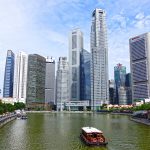
Singapore’s position is particularly interesting. The city-state generates virtually all of its electricity from imported natural gas and has among the highest electricity prices in the region. Its AI governance framework, fiscal incentives, and regulatory clarity provide strong non-cost advantages that have attracted technology companies to locate AI operations there. But at 00+ oil and LNG prices that have surged 140%, the power cost differential between Singapore and energy-producing alternatives like Malaysia or Indonesia has widened to levels that may offset the governance premium for cost-sensitive workloads.
Japan’s nuclear reactivation takes on additional significance in this context. If Japan can restart a significant portion of its idle nuclear fleet, it would offer AI data center operators a combination of reliable baseload power, competitive pricing relative to imported LNG, and the low-carbon credentials that technology companies require, all within a jurisdiction that offers political stability, intellectual property protection, and proximity to Asian end-users. The data center siting decision increasingly depends on the energy source rather than just the location.
For investors in data center operators, REIT structures, and the construction companies that build AI computing facilities, the oil price shock creates a selection effect that will concentrate new investment in locations with the most favorable energy cost profiles. Companies with existing data center portfolios in high-energy-cost locations face margin compression that may not be fully offset by contractual power cost pass-throughs. The energy geography of Asia is being redrawn by the crisis, and the AI data center map will be redrawn with it.